
A pre-plant soil sample commonly covers the main root-activity depth of 6 to 12 inches, but that depth is valid only for its stated purpose and root zone. Approving plants or imported soil without defining the sample area, depth and test method can conceal salinity, compaction or drainage defects until establishment fails.
When does a Dubai garden need soil testing before planting approval?
Test before approval when the site contains unknown fill, recurring plant failure, salt crusts, ponding, uncertain irrigation water or a major imported-soil scope. Healthy established beds with documented soil and water quality may need only targeted checks.
Which Dubai garden warning signs justify a full laboratory soil panel?
- Test new-build plots where construction fill, compaction or buried debris makes the root zone uncertain.
- Test renovated gardens showing white crusts, chlorosis, uneven lawn growth, failed ornamentals or repeated tree-establishment problems.
- Test edible beds where soil origin, salinity or amendment history is unknown.
- Investigate ponding through profile inspection and infiltration testing rather than assuming extra sand or compost will correct it.
- Add irrigation-water analysis when groundwater, reclaimed water or another uncertain supply is used, or salts return after soil replacement.
Visible symptoms do not identify the cause. Salinity, extreme pH, poor aeration, nutrient imbalance and irrigation faults can produce similar decline. Horticultural testing assesses planting soil; geotechnical testing for foundations and structural works serves another purpose.
When is a targeted Dubai soil test enough?
Order a targeted test when a healthy established area has one defined concern: electrical conductivity for suspected salinity, pH for nutrient-availability problems, organic matter for amendment planning or infiltration for ponding. Complete the required testing before plant procurement, compost incorporation, imported-soil acceptance or final grading. The next gate is valid sampling.
A Dubai garden soil test is reliable only when sampling and methods are specified
Accept a soil report only when samples represent separate root zones and the laboratory identifies each analytical method, including the extraction used for electrical conductivity.
How should representative samples be collected from a Dubai villa garden?
- Divide the site into lawns, tree zones, shrub beds, raised planters, native ground and imported-soil batches. Isolate low points, salt-crusted patches and recently amended soil.
- Set depth by purpose. Oregon State University Extension recommends the main root-activity depth, usually 6 to 12 inches, for pre-plant fertiliser assessment. Sampling at 2 to 3 inches applies only to specific surface-fertilised perennial situations. Diagnostic work on trees or subsoil may require several depths because concentrations can vary down the profile.
- Collect cores across each uniform zone with clean equipment. Combine only material representing the same soil and planting use, following the laboratory’s instructions for core numbers and sample mass.
- Record the zone, depth, date, plan location, irrigation source, recent inputs and visible drainage or salinity conditions. Correct sampling, consistent timing and retained records make trend comparisons meaningful.
- Package samples separately in approved containers and follow the laboratory’s drying, storage and delivery instructions.
Which laboratory methods must a Dubai soil report identify?
| Zone | Purpose | Separation rule | Report requirement |
|---|---|---|---|
| Lawn or bed | Assess the root zone | Separate soil types and amendment histories | Identity, depth, method and units |
| Tree area | Diagnose restriction | Report each depth separately | Depth-specific results |
| Imported soil | Approve material | Separate each traceable batch | Batch reference and sample date |
| Low or saline patch | Investigate a defect | Do not mix with healthy soil | Location and salinity method |
The report should state methods for pH, electrical conductivity, particle-size distribution and organic carbon or organic matter. It should also give units, relevant detection limits, accreditation scope and any conversion from organic carbon to organic matter.
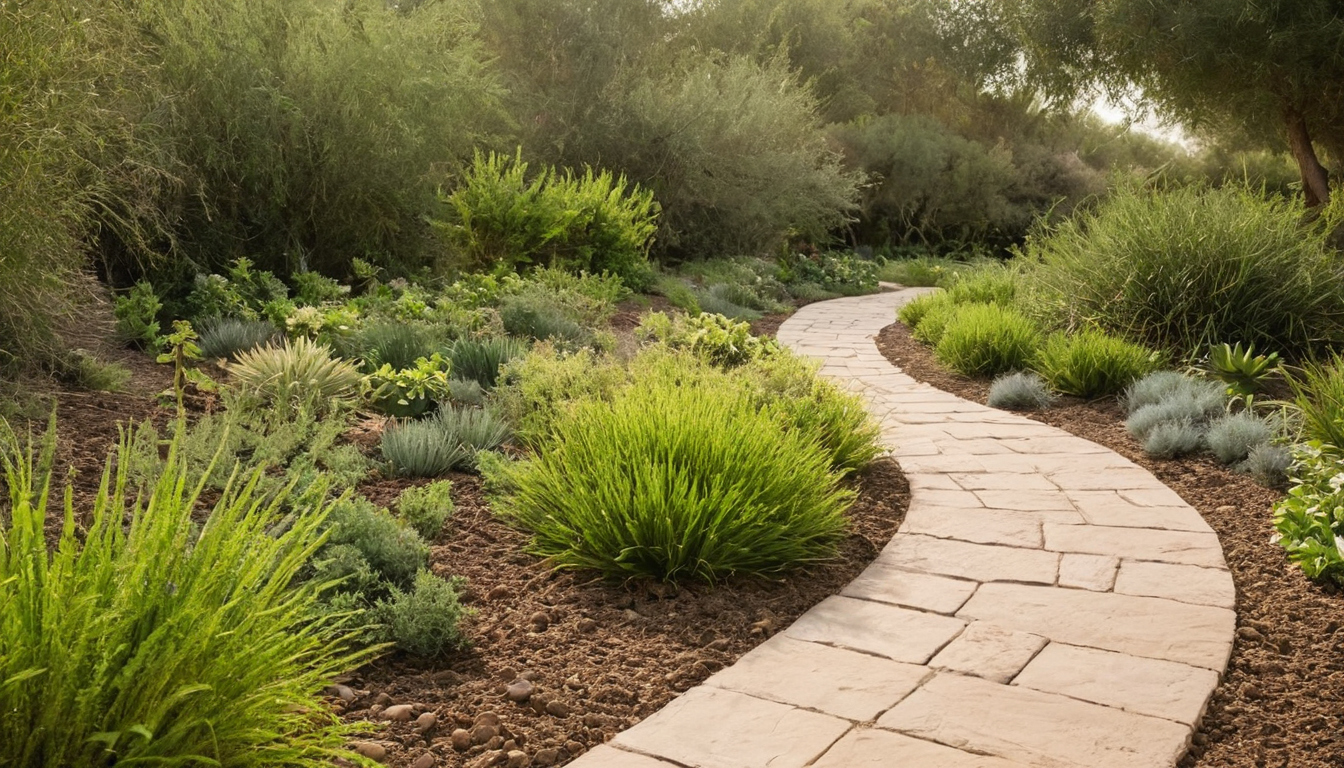
A Dubai garden soil test is reliable only when sampling and methods are specified shown with outdoor scale and terrain cues.
Saturated-paste conductivity reported as ECe and conductivity from a fixed soil-to-water extract, such as 1:5, are not interchangeable without a validated conversion. Valid results can now be connected to design actions.
How should salinity, pH, texture, organic matter and infiltration change a Dubai planting plan?
Translate each result into a plant, soil-work and verification decision. Interpret the value against its method, proposed plants, rooting depth, irrigation-water quality and drainage conditions rather than applying a universal limit.
| Measurement | Method requirement | Planting consequence | Soil-work consequence | Verification |
|---|---|---|---|---|
| Salinity | EC extraction method and dS/m | Restrict sensitive plants | Review leaching, drainage or replacement | Retest soil and water |
| pH | Named soil-to-solution method | Select tolerant plants if correction is impractical | Amend only after diagnosis | Retest after incorporation |
| Texture and organic matter | Particle-size class and stated carbon or organic-matter method | Match plants to aeration and water storage | Amend, replace or protect from compaction | Inspect and test the completed profile |
| Infiltration | Documented field method with pre-wetting and repetitions | Avoid vulnerable plants in wet zones | Revise grading, planting levels or drainage | Repeat after construction |
Oregon State University Extension explains that laboratory methods affect both results and interpretation ranges. AFNOR identifies NF EN ISO 11265, dated September 2025, as the current replacement for the cancelled January 1995 French adoption. The standard covers instrumental conductivity measurement in an aqueous extract. The International Organization for Standardization identifies ISO 11265:2025 as the revision of withdrawn ISO 11265:1994. A laboratory report must identify its actual edition and extraction procedure.
Which Dubai soil results require plant substitutions?
- Replace sensitive plant categories where method-matched salinity or pH evidence predicts poor establishment or ornamental quality.
- Prefer tolerant plants where irrigation water or adjoining saline ground would recontaminate a replaced root zone.
- Retain sensitive plants only where soil replacement, drainage and water quality can maintain suitable conditions.
Which Dubai soil results require amendments, replacement or drainage work?
- Investigate sodium separately through sodium adsorption ratio or exchangeable sodium testing because salinity alone does not diagnose sodicity.
- Avoid generic sand or compost additions because unsuitable proportions can reduce aeration or create abrupt drainage interfaces.
- Verify amendments, imported soil and drainage work through batch testing, profile inspection and post-work infiltration checks.
A high salinity result therefore requires a separate diagnostic before approving tolerant planting or remediation.
High soil salinity changes both plant selection and root-zone management in Dubai
Review plant tolerance, irrigation-water quality, drainage and leaching feasibility together. Compost or extra water alone does not remove salts. Leaching works only where suitable water can move salts below active roots without saturating the soil or affecting nearby structures.
Can salinity in a Dubai garden soil be reversed?
Separate manageable accumulation from persistent site constraints. Soluble salts can be leached where water quality, root-zone depth, infiltration and a safe drainage outlet support the process. Saline groundwater, capillary rise or movement from adjoining ground can cause salts to return, making tolerant planting or root-zone reconstruction more reliable.
Confirm the conductivity method before classifying severity. The withdrawn ISO 11265:1994 soil conductivity method measured conductivity in an aqueous extract as an indication of water-soluble electrolytes, but its summary does not establish an extraction ratio or ECe result. Values from different extraction methods are not directly interchangeable.
Match method-qualified results to ornamental tolerances. Excess salts make water harder for roots to absorb, while particular ions can cause toxicity or nutrient imbalance. Use gypsum only where testing identifies a sodium-related structure problem and confirms that calcium replacement followed by drainage is appropriate. Gypsum does not remove general salinity.
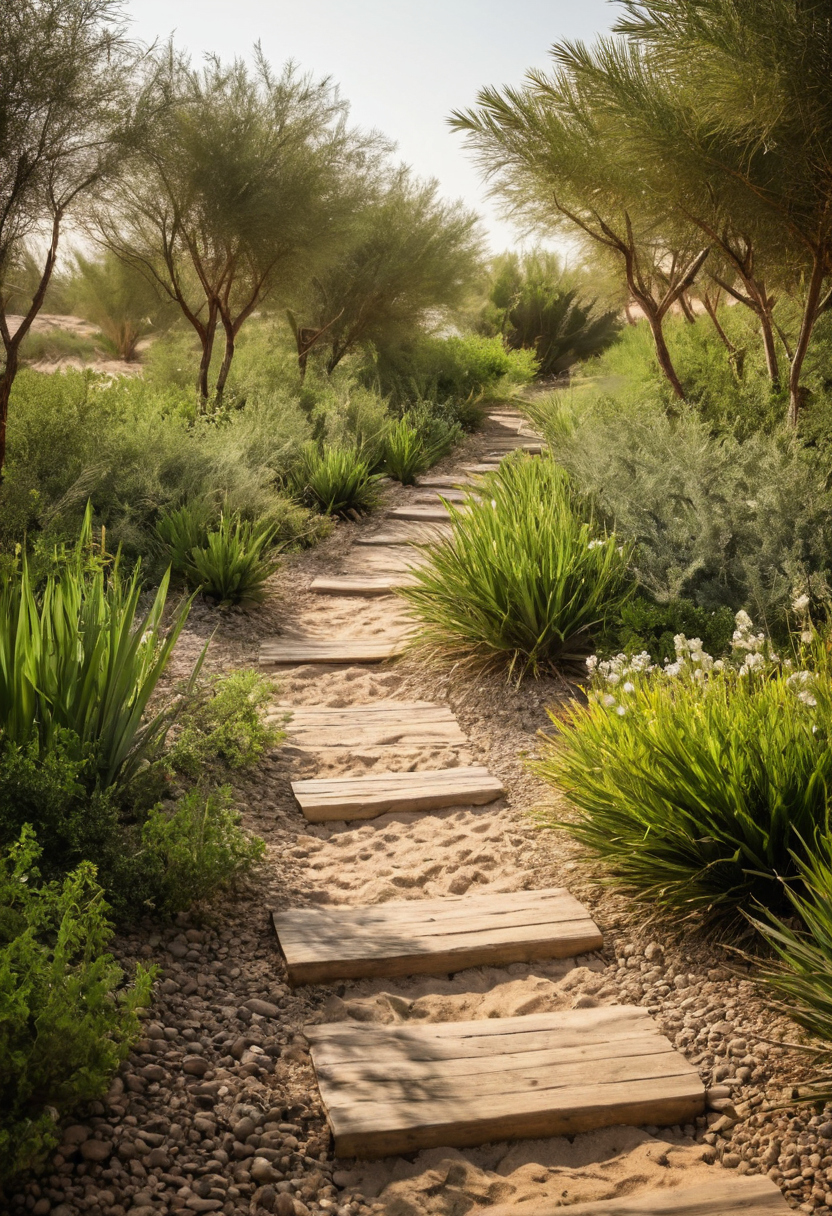
High soil salinity changes both plant selection and root-zone management in Dubai shown with outdoor scale and terrain cues.
What additional tests are needed after a high salinity result?
Order irrigation-water conductivity, sodium, chloride and bicarbonate tests, adding sodium adsorption ratio where sodium hazard needs assessment. Add soil SAR or exchangeable sodium percentage where crusting, dispersion or slow infiltration suggests sodicity. Retest soil and water after remediation using the same zones, depths, units and methods. The next decision is whether drainage can support the proposed response.
Slow infiltration or poor drainage should change the Dubai garden layout and irrigation assumptions
Change finished levels, planting elevations, species choices, drainage details and irrigation run times when testing finds slow infiltration, perched water or an obstructed profile. A surface result cannot identify the cause, so inspect the profile and confirm the drainage path.
How should a Dubai garden infiltration test be checked before design changes are approved?
Validate the result with a ring infiltrometer or another documented field method. Pre-wet the area, repeat measurements until the rate becomes reasonably stable, and test lawns, beds, low points and compacted areas separately.
- Record location, units, duration and initial soil moisture.
- Inspect for compaction, abrupt texture changes, debris and standing water.
- Escalate persistent ponding or deep restrictions for drainage, civil or geotechnical review.
Which drainage findings require raised planting, underdrains or soil replacement?
Raise planting where a suitable root zone cannot be formed at existing levels. Specify underdrains only after confirming filter compatibility, pipe falls, access and an approved outlet. Replace soil where unsuitable fill or compaction extends through the required rooting depth.
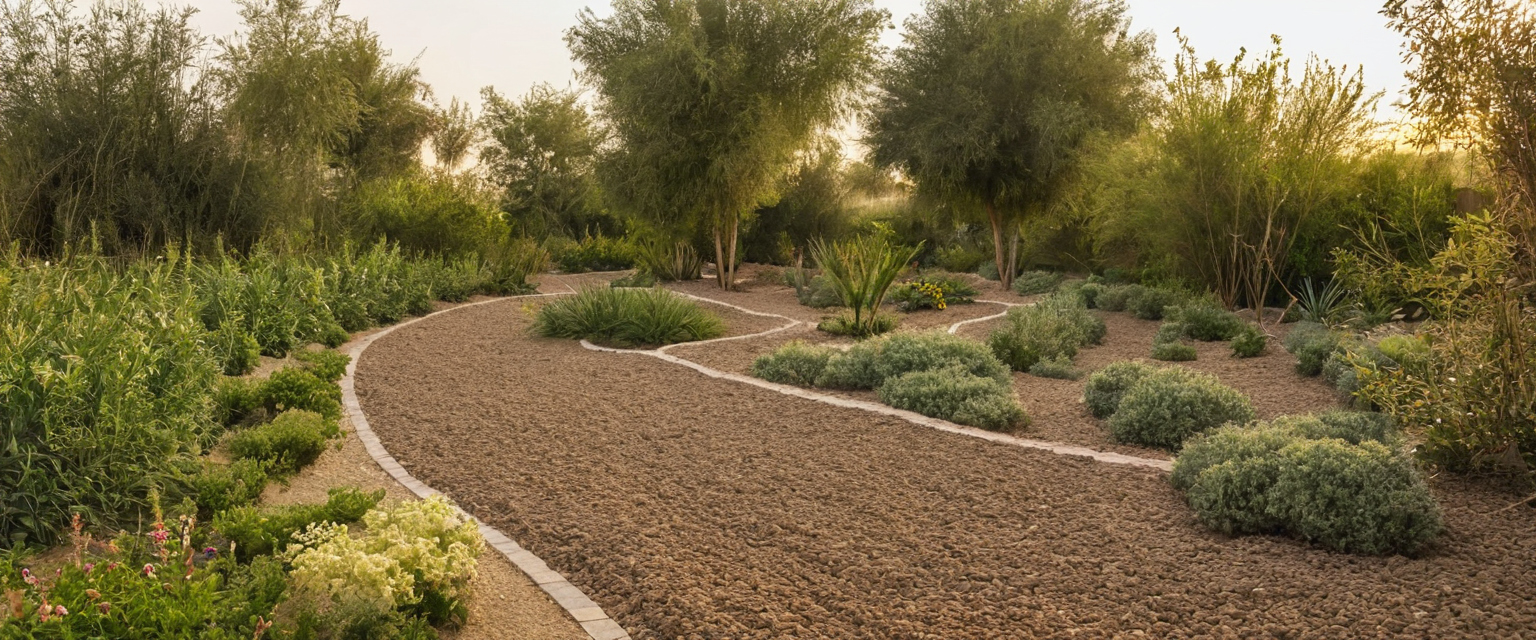
Slow infiltration or poor drainage should change the Dubai garden layout and irrigation assumptions shown as a landscape planning reference.
Check imported soil against underlying material because a sharp interface can perch water. Use measured intake and root-zone storage to set run times while checking Dubai villa irrigation zones before design approval. Approval should now depend on measurable actions.
A Dubai planting plan should not be approved until soil actions are measurable
Record tested zones, methods, acceptance criteria, remediation work and retesting responsibilities. Instructions such as “add compost” or “improve drainage” cannot be verified.
What should a Dubai soil-remediation scope state?
- Map each treatment or replacement zone and working depth.
- Specify amendment type, quantity, application basis, mixing method and required product evidence.
- Coordinate grading, drainage outlets and irrigation changes before altering the root zone.
- Link plant substitutions to the soil zones that triggered them.
- Set hold points before blending, planting and practical completion.
- Define post-work sampling, timing, methods, acceptance criteria and corrective responsibility.
The owner approves criteria, the landscape designer defines the response, the contractor documents execution, and the laboratory reports method-qualified results. The irrigation designer confirms changes affecting water application or drainage.
When should imported planting soil be rejected or quarantined?
Quarantine soil before spreading when its source or batch cannot be traced, required results are missing or values fail the project specification. Each submittal should identify the supplier, batch, intended use, test date, methods, units and acceptance limits.
Sample stockpiles or loads separately where batches or appearances differ. Resolve conflicts between supplier certificates and independent results before delivery, blending or planting. Release planting only after compliant evidence closes every hold point.
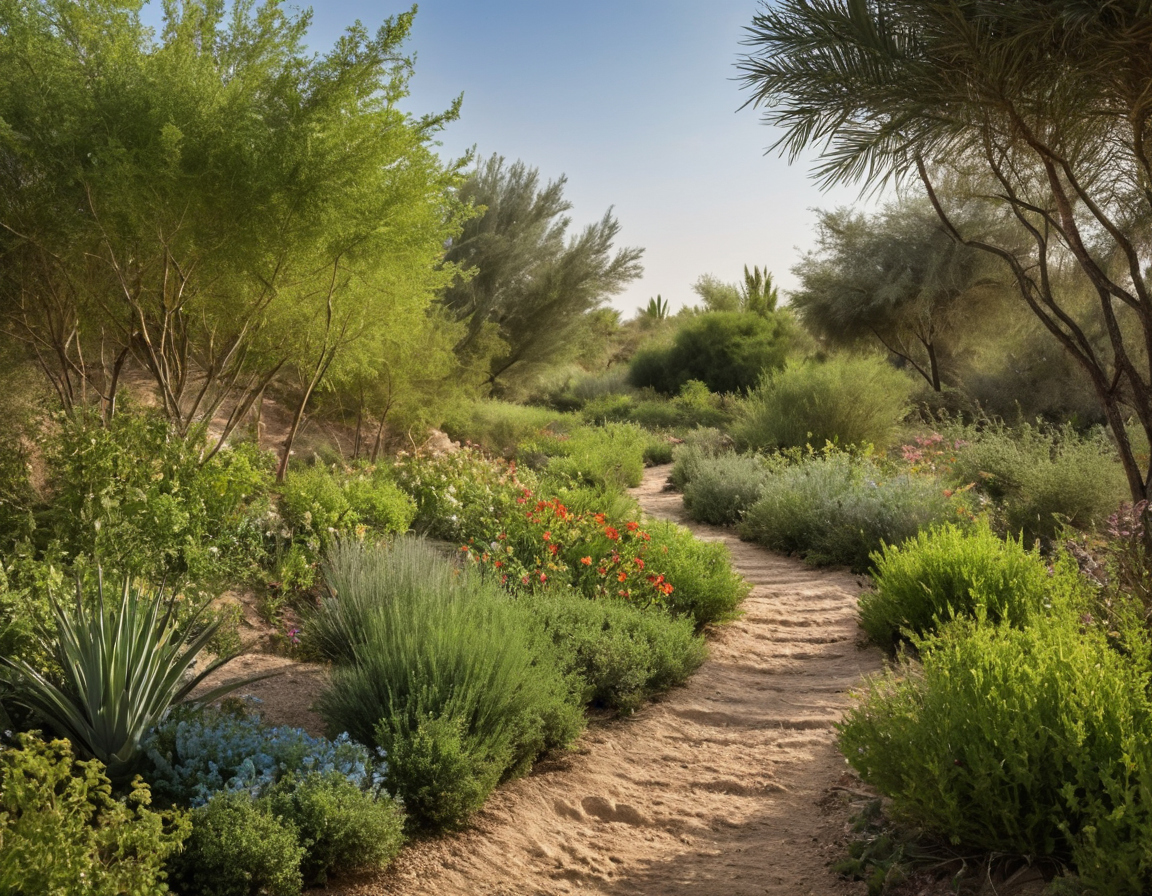
A Dubai planting plan should not be approved until soil actions are measurable shown with outdoor scale and terrain cues.
Frequently asked questions
How does soil salinity affect plant growth in a Dubai garden?
Salts reduce the ability of roots to absorb water. Specific ions may also cause leaf-edge burn, chlorosis, nutrient imbalance, restricted growth and poor establishment, especially in sensitive or newly planted species.
Why is soil testing important before importing soil or approving plants in Dubai?
Testing identifies whether the proposed soil, plants and drainage strategy are compatible. It also creates measurable acceptance criteria before material is spread and plants conceal the root zone.
Can salinity in Dubai garden soil be reversed permanently?
Soluble salts can be reduced where suitable irrigation water, adequate infiltration and a safe drainage outlet permit leaching. Saline groundwater, capillary rise or contaminated irrigation water can cause recurrence.
What does a soil salinity test measure, and why does the extraction method matter?
The test measures electrical conductivity as an indicator of soluble electrolytes in a specified extract. Extraction methods produce different values, so the result must be compared only with method-compatible interpretation ranges.
How long should water take to infiltrate before a Dubai garden drainage plan needs review?
No single duration suits every soil profile or planting use. Review drainage when repeated, pre-wetted tests show persistent slow intake, ponding or a profile restriction that conflicts with the proposed root zone and irrigation schedule.